
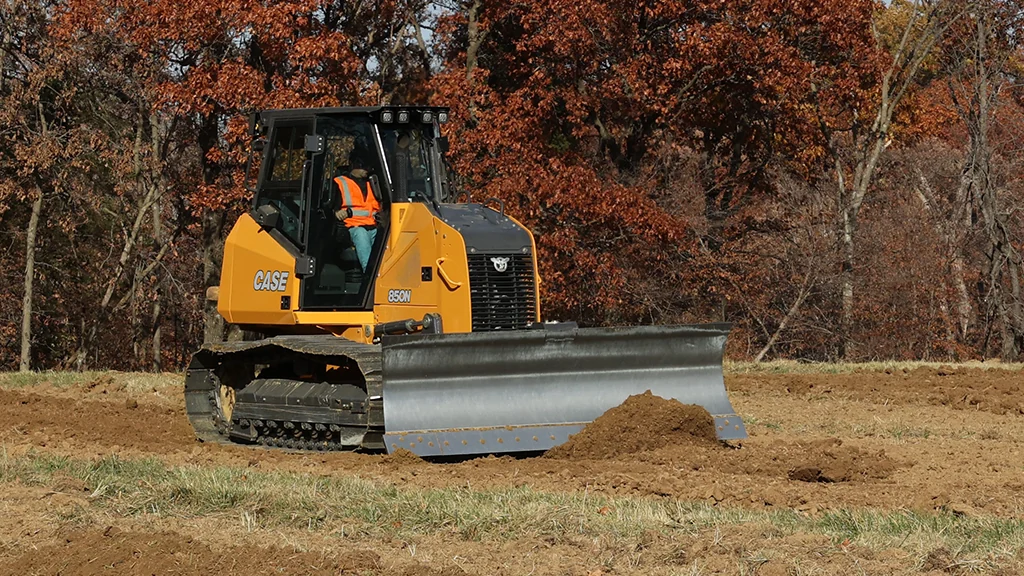
The new 650N, 750N and 850N retain their predecessors’ horsepower while introducing electronic blade controls, customizable operating settings and improvements designed to make long days in the cab more productive.
CASE Construction Equipment has introduced its next-generation N Series small crawler dozers, replacing the 650M, 750M and 850M with machines that put a greater emphasis on operator control, visibility and technology.
The new 650N, 750N and 850N debuted at ConExpo 2026, bringing improvements that go well beyond a model designation change. CASE has retained the engines and pushing power of the previous generation while updating how operators interact with the machines and how the dozers integrate with modern grading technology.
The changes were highlighted in a recent Equipment World walkaround of the 850N, featuring CASE product manager Jeremy Dulak.
Familiar Power With More Operator Control
All three N Series models retain their previous engine horsepower ratings, with FPT diesel engines providing power across the lineup.
| Model | Gross Horsepower |
|---|---|
| CASE 650N | 74 hp |
| CASE 750N | 96 hp |
| CASE 850N | 120 hp |
Rather than chasing higher horsepower figures, CASE concentrated on giving operators more control over the power already available.
One of the biggest changes is the adoption of electrohydraulic blade controls across all three models, including the 650N. Operators can adjust blade response, travel behavior and other machine settings to match their preferences or the work being performed.
The new machines also introduce more flexible travel-speed selection. Instead of cycling through all 15 preset speed steps available on the previous M Series, operators can configure a smaller selection of preferred speeds and move directly between them.
For contractors moving between rough grading, finish work and other applications, that flexibility could reduce unnecessary adjustments throughout the day.
A More Comfortable Place to Spend the Workday
The redesigned operator station is among the most noticeable changes.
A new touchscreen display provides access to machine settings, while a rotary encoder gives operators another way to navigate menus without relying entirely on the touchscreen. Controls are mounted to the seat armrests, allowing them to move with the operator rather than remaining fixed to the cab.
CASE has also expanded its comfort features, including:
- Standard heated seating with an available premium heated and ventilated seat
- Additional cab ventilation and improved climate-control distribution
- USB and USB-C charging connections
- Additional storage and updated interior controls
- Customizable operating settings for different operators and applications
These improvements may sound modest individually, but operators who spend eight or ten hours a day in a dozer know how much cab ergonomics can affect fatigue and productivity.
Better Visibility in Both Directions
CASE also made several changes to the machines’ exterior design to improve sightlines.
The exhaust stack has been repositioned to align more closely with a cab pillar, while the engine air intake has been moved beneath the hood. Redesigned protective sweeps also reduce visual obstructions where fitted.
At the rear, CASE reshaped the machine’s bodywork and moved the rear profile inward by approximately eight inches. The result is intended to improve visibility when backing up or working around obstacles and attachments.
A rearview camera is integrated with the new display, allowing operators to view the area behind the machine while working.
For contractors operating on crowded jobsites or performing precision grading near existing structures, improved visibility can be just as valuable as additional horsepower.
Machine Control Moves Further Down the Lineup
Another important development is the expansion of machine-control compatibility.
The 650N now joins the larger models in offering factory-installed machine-control options, while electrohydraulic blade controls are standard across all three machines.
CASE continues to support universal machine-control preparation and Leica technology. The company is also developing its own machine-control hardware through its CASE Application Platform, including Genesis receivers and display technology.
The broader significance is that capabilities once associated primarily with larger, more expensive dozers are becoming increasingly available in smaller machines.
For contractors handling site preparation, residential development, utility work or smaller commercial projects, that could make advanced grading technology accessible across more of their fleets.
Maintenance and Efficiency Improvements
The N Series also introduces changes intended to reduce unnecessary operating costs and maintenance interruptions.
EcoMode helps manage engine output during lighter work, while automatic idle shutdown can reduce fuel consumption and unnecessary engine hours.
The 750N and 850N receive standard hydraulic reversing cooling fans, helping clear debris from the cooling system in dusty environments. CASE has also updated several components and added diagnostic capabilities.
Two-way telematics supports remote diagnostics and machine updates, potentially reducing the need for certain service visits.
Although these features do not change the machines’ rated horsepower, they may have a meaningful effect on operating costs over the life of the equipment.
What It Means for Contractors
The N Series illustrates a broader direction in construction equipment development. Manufacturers are increasingly concentrating on operator efficiency, precision and machine intelligence rather than relying solely on higher horsepower or larger machines to deliver productivity gains.
For contractors already running CASE M Series dozers, the decision to upgrade will likely depend on how much value they place on electronic controls, machine-control integration, visibility and cab improvements.
Those working in precision grading or operating multiple machines with different operators may find the customizable settings particularly attractive. Contractors primarily performing straightforward pushing work may see less reason to replace a productive existing machine immediately.
Either way, the new N Series demonstrates how much technology is moving into the smaller end of the crawler dozer market.
Watch the CASE N Series Walkaround
For a closer look at the redesigned cab, controls, visibility improvements and machine-control features, watch the CASE 850N walkaround published by Equipment World.
Additional specifications and details are available in Construction Equipment’s N Series overview.
Leave a Reply